This Current Affairs Journals aims to provide readers with some essential knowledge about the highly controversial topic Space Exploration. It discusses issues as well as benefits related to this topic. The focus lies primarily on the benefits and new development that have been achieved from the early days of space exploration until now. The paper also covers the main goals which the companies, currently researching for this topic, have. The information that is being presented in this CAJ, in form of scientific papers and articles, was collected over a certain period of time. The information used to underline the arguments for and against space exploration is taken out of discussions and debates. As it is believed that space exploration is not worth its money, many companies have to face harsh criticisms. However, some responses have included that people should give more thought on the exploration and colonization of new planets in our solar system, as this may help humanity to evolve into a species that will harvest energy from other planets or even become a species that expands to other planets. From the results of the discussions carried out, we can draw the conclusion that more people support the exploration of the space, as it could be a great benefit for humankind.
Monday, April 28, 2014

Thursday, April 10, 2014
The Napalm Girl
Describing three pictures: The Napalm Girl
Here's the link to Emina's blog:
The Napalm Girl
Here's the link to Emina's blog:
The Napalm Girl
Friday, April 4, 2014
Narrative Article Homework
The Search for Malaysia Airlines Flight MH370
KUALA LUMPUR, Malaysia — Lana cries. She misses her husband desperately. The last weeks were unbearable for her. Not one single second goes by in which she does not think about him. The constant pain, like a black empty hole in her chest, becomes bigger and more intolerable every day. Ever since the early hours of March 8 en route to Beijing, 239 people disappeared without a trace along with the Malaysian Airlines Flight 370. Up to this Monday nothing has changed. At first it seemed to be as horrible as any other day, but the complete opposite was the case. What appeared to be a never-ending, exhausting search, arouse new hope for the affected families. The big impressive Australian naval ship, sailing for days and days across the deep, dark blue Indian Ocean, has detected a series of underwater signals that could match with those of a plane's data, possibly from the missing jet.

“Clearly, this is a most promising lead,” stated Angus Houston with determination, the lead coordinator of the search. This statement awoke hope for the relatives in mourning. "We want to put an end to this terrible nightmare and start living our lives again."
[194 words]
[194 words]
Tuesday, April 1, 2014
Little history of photography
Little History
of Photography
As my life runs by I see the most innovative and
stunning technological development when it comes to camera and other electronic
equipment. I am a portrait painted between 1503 and 1506 and I am exhibited since
the late 80s in the one of the world’s largest and most famous museums – The
Louvre. The historic monument is located
in the heart of Paris. With its prestige the museum attracts over nine million
visitors each year.
We count the year of 1939 when one very special lady passed by. “Look at this breathtakingly beautiful painted portrait”, said the well-dressed lady who was walking towards me. She wore an elaborately embroidered dress with attached petticoat and purple embroidery. I knew that she must have been from a royal family as she could afford taking pictures, which cost around 25 gold francs at that time. The values for the exposure time and brightness are coupled to one another. It took a certain period of time until the picture was taken because the photographs were iodized silver plates exposed in the camera obscura, which had to have a proper light to become a pale grey picture. “I think I might have to retouch the negative”, said the lady with the pricy camera. Everyone around her was surprised I looked in an admirable way. At this time it was something special to have a camera.´, but as time went by it became commercialized and I saw more and more people taking pictures.
Feedback:
à Include more facts from the original text
à use a more formal language
Little History
of Photography
Numerous
people have contributed to the progress of photography ever since the early
days of photography. Are you wondering who is talking to you? Yes, it is me,
right here in the center of this picture painted by Leonardo da Vinci.

A little while ago I have heard a fourteen-year old child, who was part
of an exhibition group, complaining about how bad the quality of the pictures
on his iPhone was. He moaned: “Why is this taking so long to take a decent
picture?!” Let me tell you an interesting story in line with this statement.
I was painted during the Renaissance in the early 1500s and had been
exhibited in one of the world’s largest and most famous museums since the late
1880s. I have seen the most innovative and stunning technological developments
when it comes to cameras.
At this time, attempts to capture fleeting images were seen as ludicrous
and blasphemous. Only after more than 100 years of unsuccessful attempts of
searching for a means to capture those images, did Niépce and Daguerre succeed to
inventing something that would forever change the nature of visual
representation: photography.
The 1840s marked the beginnings of the evolution of photography. The daguerreotypes, as Daguerre dubbed his
invention, were photographs on a highly polished, silver-plated sheet of copper
exposed in the camera obscura. The values for the exposure time and the low
light-sensitivity of the plates are coupled to one another. This means that the process to acquire a pale
grey image not only took a considerable period of time, it also cost 25 gold
francs. It was not common to be in the possession of a camera. People who were
able to take pictures were seen as noble and photography was associated with
wealth.
Things developed so rapidly that by 1840 photography has soon become a professional
tool. During the industrialization photography became commercialized and more
affordable. Most of the miniaturists became professional photographers and
encountered something new and interesting. This also paved the way for businessmen
and young photographers. Many people moved to the cities and more and more owned
their camera.
Now, if you think about complaining the next time on how much time your
iPhone needs to take pictures, think about all inconveniences the artists have
had with the development of the first camera.
[387 words]
Tuesday, March 18, 2014
PSA: After-death avatar

It is being claimed that immortality should be possible for the "wealthy elite" by 2045. This should be achieved through fully functional holographic human avatars. Now you should ask yourself, is it human and normal to talk to a person who has passed away a long time ago? You are still alive and you can't hold on the past. Instead you have to keep all the good memories connected to the person you lost and let bad feelings go away. I mean would you want your brain to be "transplanted into an artificial body"? Give it a serious thought!
Monday, March 17, 2014
CAJ #1: First thoughts
Space Exploration
I found a quite impressive website about exploring the universe online → http://htwins.net/scale2/ !!!!
“Earth is the cradle of humanity, but it is impossible to live forever in the cradle”
~ Tsiolkovski
- Tau Zero - http://www.tauzero.aero/
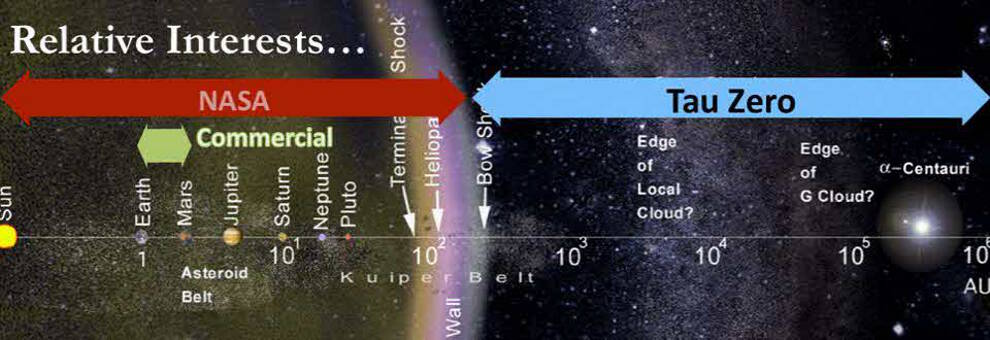
- a waste of money?
- new life?
- new world? new civilization?
- destinations
- planetary science
HOW?
- robotic probes
- human spaceflight
Summer triangle
- Lyra constellation
- Vega
- Altair
- Deneb
Interesting facts:
Procyon
- over next 10 mio years it will grow to 100 times bigger and turn red
→ If all the 7 billion humans stood on top of one another, the stack would approx. be 10 million kilometers tall.
- 7 times bigger than the sun!
Links
http://www.centauri-dreams.org/
Friday, March 14, 2014
A day in life of Monika
It's a typical Monday morning. My alarm goes off at 4:45 and I am still in my cosy little land of dreams. To snooze it I know I simply have to tap the screen, so that's what I do automatically. I snooze the alarm to get at least another nine minutes of sleep.

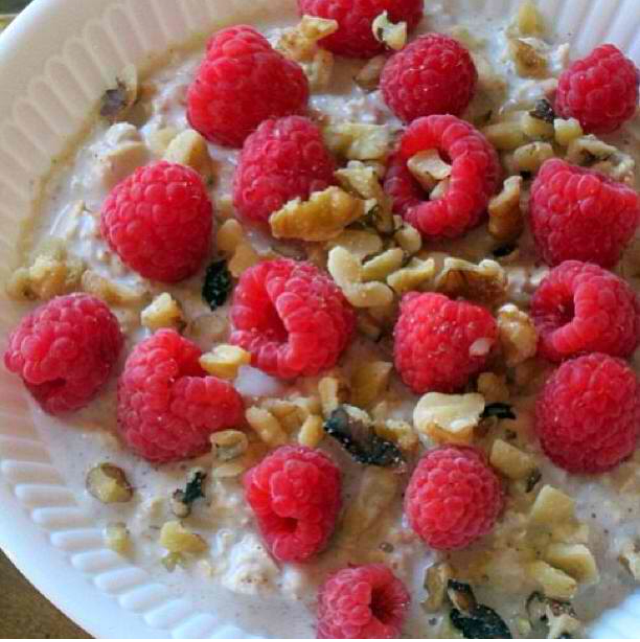
Next I go to the bathroom to brush my teeth and wash my face. Then I prepare my beloved breakfast - a classical oatmeal with fruits. I really can't get enough of it so I literally eat it every single morning.
As I need to start working at 6 AM I leave the house around 5:30 AM. After a six-hour shift (or four-hour shift depends on how I have class that afternoon) I drive home to leave the car in the garage. At noon I sometimes have a quick meal before I head to university.

Subscribe to:
Posts (Atom)