Showing posts with label Melissa. Show all posts

Wednesday, June 4, 2014

How a Photographic Film is Developed

How a Photographic Film is Developed

You surely remember the cameras from the 80s that used to actually have a film, but do you know how this film is developed? We, for our part, have always been wondering how this is achieved and have finally received the chance to find out more about the techniques of developing a photographic film. Now we will take you on a behind-the-scenes tour of the entire process.

There are several development processes that can be used to develop the photographic film and we have chosen to explain the developing tank. Most of these methods only differ in the containers that are used for carrying the chemicals. They use, however, more or less the same chemicals in the actual process. The developing tank is more convenient since it allows photographic films to be developed in a daylight environment instead of a darkroom.

To begin the process of converting the latent image into a visible picture, the film needs to be loaded onto a film reel. This, however, has to be done in a completely dark environment since any light contact could result into badly developed pictures. Once the reel is loaded, it is put inside the developing tank. Then, the lid is screwed onto the tank which allows to continue the process in the daylight. In order to dissolve the outer layer of the film, the film needs to soak in cold water.

The outer layer is simply a very thin skin of gelatin  which is sensitive to water and protects the film from any scratches during the handling. After the protective layer is dissolved in water, the film is exposed to the developer solution. The solution’s primary function is to make the latent picture visible. The developer solution is comprised of a combination of chemicals, consisting of alkali and metol or hydroquinone mixed with water. One chemical within the developer solution, namely metol, reduces the sub-micron sized grains of silver halide crystals in the emulsion to black metallic silver. The developer solution has to be diluted with water according to the measurements. Once the developer is poured carefully into the tank and the push-cap is placed on top of it, the whole tank needs to be slowly flipped a few times.

After this, the developer has to be poured out completely for the next step.  The next crucial step in the developing process is the stop bath. This bath consists of a glacial acetic acid, usually around one to two percent, or water. The purpose of the stop bath is to simply halt the development of the film. There are two ways for achieving this. One way is by rinsing out the solution with water. However, during the rinsing the developing process continues at a low level for an uncontrolled period of time. If an immediate stop of the development is desired, the stop bath consisting of a glacial acetic acid is used.

This bath neutralizes any excessive development of the silver crystals when alkalis and acids are mixed together. The neutralization of the alkalinity of basic developers can help to preserve the strength of the fixer. The function of the stop bath is highly important since an overdevelopment of the silver crystals results in an image that is virtually impossible to discern. Pouring the stop bath into the tank needs to be done exactly the same way as with the developer solution.

A developing process, however, cannot be finalized without the fixer. It is a chemical mix and often also called hypo, which is the abbreviation of “hyposulphite”. In most cases, the unexposed silver halide remains on the photographic film and thus becomes sensitive to further action by light. Therefore the fixer is very important as it stabilizes the image and makes it light-resistant by dissolving the remaining silver halide salts. After the unexposed silver crystals are removed, the fixer then hardens the remaining crystals in the emulsion. This is the process that enables to preserve the photographic image over time.

Once the film has been developed, the process needs to be completed with two steps. Firstly, the film needs to be carefully rinsed with water in order to remove all the chemicals used in the steps before. If any chemicals remain, a deterioration of the image could be caused. Lastly, the film is dried in a dust-free environment, cut and placed into protective sleeves and finally ready for viewing.

[731 words]

Thursday, May 29, 2014

How Instant Photographs Work

The world of photography has changed since Edwin Land introduced a remarkable new invention to the world in 1947 - instant photography. Ever since the invention of the Polaroid camera, we could not imagine a world without it anymore.


I assume that nearly everyone knows how a Polaroid camera looks like and what needs to be done in order to take a picture, but do you actually know how the film is developed inside the camera? After pressing the shutter release button on the top of the device, the picture appears in a matter of minutes. In order to be able to fully understand the physics behind a Polaroid camera, it is essential to first be familiar with the basics of traditional photographic film.

Normal film is composed of plastic base coated with particles of light-sensitive silver compound. A black-and-white film has one layer of silver compound. When the film is exposed, the sensitive particles react to the light by changing their structure. To create an actual photograph, the film would then have to be treated with several chemicals. The instant film, however, already provides the developing chemicals in the different layers itself.  


The light-sensitive layer lies on top of the black base layer, which is under the image layer, the timing layer and the acid layer. This specific arrangement of the layers contributes a great deal to the quick developing, as it creates the environment for a chemical chain reaction. This reaction is triggered by the reagent, which is situated just above the light-sensitive layers. The reagent is composed of a mix of opacifiers, alkali, white pigments and other elements. As soon as the image is captured, the film sheet is ejected out of the camera through a pair of rollers, which spread the reagent material onto the sheet. As the reagent chemicals move through the individual layers, the exposed particles are changed into metallic silver. At the same time the developer dye is dissolved by chemicals and diffused up into the image layer. However, only the dyes from the unexposed layers will reach the image layer. The opacifiers and alkali in the reagent then react with the acid layer, making the opacifiers clear so that a visible image is created.

[372 words]

Saturday, May 10, 2014

Rating of an instruction for building a camera


We believe that the instructions of Tim Hunkin for building a camera lucida are barely understandable and could undergo many improvements. The instruction appears to be very confusing due to its design and the way it is constructed contentually. The reader is not really able to follow the directions properly as the instructions and the corresponding drawings do not have an order. To make it all more organised and chronological, the author could have, firstly, divided the instructions into points and, secondly, included numbers to the drawings. He also could have explained it more detailed, since it should be understandable for someone who never made a camera lucida before. The way it is written, it would take a long time for a beginner to build it, which is counterproductive. We also noticed that neither a list of what is needed to built it nor clear and detailed pictures of how to make it step by step can be found in this instruction. All in all, the instruction cannot be followed easily and therefore is, in our opinion, not one we would recommend reading.

[183 words]


Emina Ribo, Monika Maric, Carola Ponjevic

Thursday, April 10, 2014

Tuesday, April 1, 2014

Little history of photography

Little History of Photography

As my life runs by I see the most innovative and stunning technological development when it comes to camera and other electronic equipment. I am a portrait painted between 1503 and 1506 and I am exhibited since the late 80s in the one of the world’s largest and most famous museums – The Louvre.  The historic monument is located in the heart of Paris. With its prestige the museum attracts over nine million visitors each year. 

We count the year of 1939 when one very special lady passed by.  “Look at this breathtakingly beautiful painted portrait”, said the well-dressed lady who was walking towards me. She wore an elaborately embroidered dress with attached petticoat and purple embroidery. I knew that she must have been from a royal family as she could afford taking pictures, which cost around 25 gold francs at that time. The values for the exposure time and brightness are coupled to one another.  It took a certain period of time until the picture was taken because the photographs were iodized silver plates exposed in the camera obscura, which had to have a proper light to become a pale grey picture. “I think I might have to retouch the negative”, said the lady with the pricy camera. Everyone around her was surprised I looked in an admirable way. At this time it was something special to have a camera.´, but as time went by it became commercialized and I saw more and more people taking pictures.

Feedback:
à Include more facts from the original text
à use a more formal language


Little History of Photography
Numerous people have contributed to the progress of photography ever since the early days of photography. Are you wondering who is talking to you? Yes, it is me, right here in the center of this picture painted by Leonardo da Vinci. 


A little while ago I have heard a fourteen-year old child, who was part of an exhibition group, complaining about how bad the quality of the pictures on his iPhone was. He moaned: “Why is this taking so long to take a decent picture?!” Let me tell you an interesting story in line with this statement.

I was painted during the Renaissance in the early 1500s and had been exhibited in one of the world’s largest and most famous museums since the late 1880s. I have seen the most innovative and stunning technological developments when it comes to cameras.

At this time, attempts to capture fleeting images were seen as ludicrous and blasphemous. Only after more than 100 years of unsuccessful attempts of searching for a means to capture those images, did Niépce and Daguerre succeed to inventing something that would forever change the nature of visual representation: photography.

The 1840s marked the beginnings of the evolution of photography. The daguerreotypes, as Daguerre dubbed his invention, were photographs on a highly polished, silver-plated sheet of copper exposed in the camera obscura. The values for the exposure time and the low light-sensitivity of the plates are coupled to one another.  This means that the process to acquire a pale grey image not only took a considerable period of time, it also cost 25 gold francs. It was not common to be in the possession of a camera. People who were able to take pictures were seen as noble and photography was associated with wealth.
Things developed so rapidly that by 1840 photography has soon become a professional tool. During the industrialization photography became commercialized and more affordable. Most of the miniaturists became professional photographers and encountered something new and interesting. This also paved the way for businessmen and young photographers. Many people moved to the cities and more and more owned their camera.

Now, if you think about complaining the next time on how much time your iPhone needs to take pictures, think about all inconveniences the artists have had with the development of the first camera.


[387 words]

Friday, March 14, 2014

A day in life of Monika


It's a typical Monday morning. My alarm goes off at 4:45 and I am still in my cosy little land of dreams. To snooze it I know I simply have to tap the screen, so that's what I do automatically. I snooze the alarm to get at least another nine minutes of sleep.


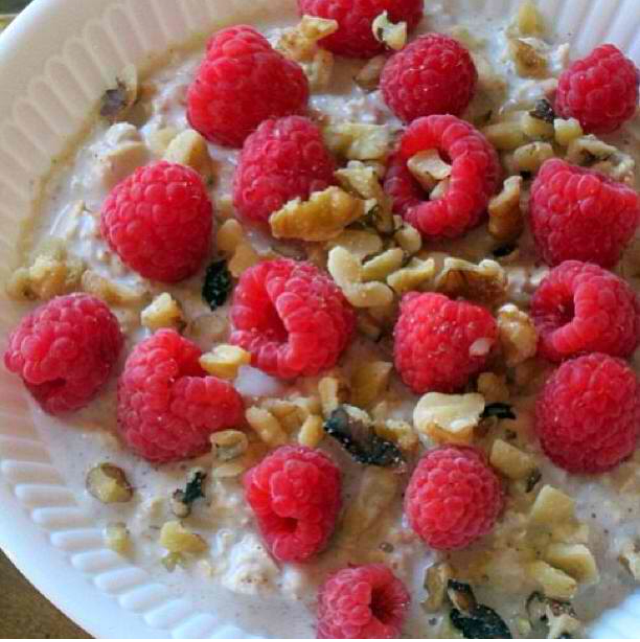
Next I go to the bathroom to brush my teeth and wash my face. Then I prepare my beloved breakfast - a classical oatmeal with fruits. I really can't get enough of it so I literally eat it every single morning.


As I need to start working at 6 AM I leave the house around 5:30 AM. After a six-hour shift (or four-hour shift depends on how I have class that afternoon) I drive home to leave the car in the garage. At noon I sometimes have a quick meal before I head to university.


Usually I have three to four classes a day and am finished around three or five o'clock. When the weather is nice I like to walk home from university, otherwise I take the bus. When I arrive at home, my mother has prepared something delicious to eat. I am really thankful to have my family waiting for me at home and supporting me no matter what. In the evening I like to relax and do my homework (if there is some).


Tuesday, December 17, 2013

Text Project

Lejla Kurtic, Dunja Devic, Monika Maric

First Version:

Joining the EU has brought serious immigration problems to Malta

I. Malta

A. General information


Malta is one of the world's smallest and most densely populated countries, with a total population (includes including foreign residents) of 389,769. Malta has always been seen as the home of settlers and conquers such as the Sicilians, Arabs, Spanish and many more. Being a southern country, it is located…. As one of the most southern European countries, it is located close to Tunisia and Libya. After the EU accession in 2004, Malta has become the closest gate to the European Union for immigrants from these northern African countries. This has caused a continuous rise of immigration numbers. In 2009, 4.4% of Malta’s total population were occupied by foreign nationals, which was below the EU average of 6.4%. Of these, 2% were EU citizens (mostly British, but also Italians and others), while 2.4% were from non-EU countries. Since the late 20th century, Malta has become a transit country for migration routes from Africa towards Europe. Between 2008 and 2012, Malta received, on average, the highest number of asylum seekers. This inward movement of foreigners into the Maltese Islands is regulated by (the Chapter 217 of the Laws of Malta:) the Immigration Act.


We would write a topic sentence and a concluding sentence. Sum it up and give the readers (in the topic sentence) an idea what your paper is about.


B. The way to EU membership

There were various opinions on Malta’s EU membership. Many people were looking forward to being a part of the community and underlining Malta’s European identity. Having advantages such as free travelling, choice of residence within EU countries and a hope for more tourists coming to Malta were some reasons to support the Nationalist party. The Labour party on the other hand had other plans for Malta, aiming to lead it to a “Switzerland of the Mediterranean” with closer ties to the EU but no membership. Amongst other arguments they argued that there was a threat of Sicilians taking Maltese jobs. Instead, it is African immigrants flocking to Malta in search for better lives. In the end, 53.6% of the voters had voted yes, forming a narrow majority in favour of accession. It was by far the lowest approval rate in the EU’s enlargement.


II. Immigration

A. Before joining the EU

Before Malta joined the EU in 2004, immigration levels were negligible. With its long history of repelling unwanted invaders like Ottoman Turks in the 1500s and helping Britain to keep Hitler at bay in the Second World War, it finally became independent in 1964. The Maltese needed to form a new identity after centuries of foreign leadership. This achievement is threatened now by thousands of immigrants coming to Malta, bringing unfamiliar habits and culture to the small island.


B. Changes that came with EU-membership

Now Malta receives the most asylum applications in the whole world, in relation to its small size. Alone in 2013 1,079 refugees found shelter in Malta and over the last decade the number adds up to 17,743. The high number of immigrants causes several problems for the small country and it has difficulties to cope with the situation. Its closeness to Africa has made Malta into a gateway for immigrants seeking entry to Europe. These refugees are generally poor and undocumented when they arrive in Malta and have to stay in crowded detention centres for up to 18 months. The conditions in those detentions centers are considered to be in a poor state and inhuman. The government states that resources to deal with boatloads of migrants who arrive at Maltas shores, are not given. Furthermore there is a growing fear of “cultural invasion” and racist assaults have begun to occur. Malta is the smallest country in the EU but has to carry a burden that is much bigger than in any other country and therefore desperately needs help from the EU.


III.Conclusion

Looking towards the future


Feedback:

1. Too many numbers in the first paragraph
2. Cohesion is sometimes missing
3. Rewrite Topic sentence
4. Concluding sentence missing in the second paragraph
5. Habits --> Customs (informal-formal)
6. "Most asylum seeker" --> "The largest number of..."
7. "Looking towards future would be a new aspect, not a conclusion."


Final version:

Joining the EU has brought serious immigration problems to Malta
In 2004 Malta became a member of the EU and with the membership a new problem occurred - exceptionally high immigration numbers. Malta is one of the world's smallest and most densely populated countries, with a total population (including foreign residents) of 389,769 people. It has always been seen as home of settlers and conquerors such as the Sicilians, Arabs, Spanish and many more. As one of the most southern European countries, it is located close to Tunisia and Libya. After EU accession in 2004, Malta has become the closest gate to the European Union and a transit country for migration routes from Africa towards Europe. This has caused a continuous rise of immigration. Between 2008 and 2012, Malta received, on average, the highest number of asylum seekers in the EU, who are causing serious problems in the Maltese society.

 
When Malta entered the EU admission process there were various opinions on its membership. Many people were looking forward to being a part of the community and underlining Malta’s European identity. Advantages such as free travelling, choice of residence within EU countries and a hope for more tourists coming to Malta were some reasons to support the Nationalist party, who were in favour of the EU membership. The Labour party on the other hand had other plans for Malta, aiming to lead it to a “Switzerland of the Mediterranean” with close ties to the EU but no membership. Amongst other arguments they stated that there was a threat of Sicilians taking Maltese jobs. Instead, now it is African immigrants flocking to Malta in search for better lives. In the end, 53.6% of the voters voted “yes”, forming a narrow majority in favour of accession. It was by far the lowest approval rate in the EU’s enlargement and there are still many voices that consider the EU membership as a poor decision.    


Before Malta joined the EU in 2004, immigration levels were negligible. With its long history of repelling unwanted invaders like Ottoman Turks in the 1500s and helping Britain to keep Hitler at bay in the Second World War, it finally became independent in 1964. The Maltese needed to form a new identity after centuries of foreign leadership. This achievement is threatened now by thousands of immigrants coming to Malta, bringing unfamiliar habits and culture to the small island. Although most immigrants want to proceed and go to mainland Europe, they have to return within three months to the country they first came to. As a result of this regulation hundreds are caught each year and forcibly sent back from other Schengen countries. Still the desired destination for most immigrants is another European country and therefore they have no intentions of integrating into Maltese society.

Malta receives the most asylum applications in the whole world, in relation to its small size. Alone in 2013 1,079 refugees found shelter in Malta and over the last decade the number adds up to 17,743. The high number of immigrants causes several problems for the small country and it has difficulties to cope with the situation. Its closeness to Africa has turned Malta into a gateway for immigrants seeking entry to Europe. These refugees are generally poor and undocumented when they arrive in Malta and have to stay in crowded detention centers for up to 18 months. The conditions in those detention centers are considered to be in a poor state and inhuman, but the government states that resources to deal with boatloads of migrants who arrive at Malta's shores, are not given. Furthermore there is a growing fear of “cultural invasion” and racist assaults have begun to occur. Malta is the smallest country in the EU but has to carry a burden that is much bigger than in any other country and therefore desperately needs help from the EU. Unfortunately, so far there have not been any measures taken to enhance the immigration situation in Malta.


The future of Malta remains uncertain. Action has to be taken from different directions. On the one hand the EU needs to support frontier countries like Malta in implementing policies concerning asylum seekers and mandatory burden sharing throughout the EU. Cecilia Malmstrom, the European home affairs commissioner, offered extra emergency funds and assured to get other EU states to take some of Malta’s immigrants. On the other hand the people in Malta - its residents as well as migrants - need to accustom themselves to each other. The Maltese need to adjust to a more multicultural society without segregation of ethnic minorities and rising of racist sentiments. At the same time the migrants who want to stay in Malta need to integrate with the help of a proper system which will assist them when they arrive and process applications faster. This could be a way to solve the immigration problems in Malta. 

Wednesday, November 13, 2013

The Concil of Europe

The Concil of Europe


The Council of Europe is the most important organisation besides the European Union in Europe. It was founded in 1949 by ten European states in order to promote democratic stability, human rights, the rule of law and fundamental freedoms all over Europe. The Council further strives to raise awareness of Europe’s cultural identity and diversity. Currently there are 47 members, including all EU member states as well as several other European countries. The general requirements for a country to join this international organisation are to be at least partially located on the European Continent and to share the goals the ten founding countries stated. However, countries that are located beyond European borders can join too, as observer or partner, provided they accept the Council’s guiding principles. These states are permitted to send representatives to the meetings of the Committee of Ministers and intergovernmental committees in order to observe these assemblies. With the Parliamentary Assembly, which consists of 318 men and women from all the member states,  they may attain observer status, meaning that they are authorized to engage in Assembly sessions, only without voting rights. Furthermore the Council also partners up with organizations such as the EU, the UN and a variety of international organizations, including the Arab League Educational, Cultural, Scientific Organization (ALECSO) or the Organization for Security and Co-operation in Europe (OSCE). The main purpose of the Council, with it’s members, observers and partners, is to assure democracy in and cooperation between all European countries, which makes this organisation one of the most important on our continent.

Sunday, October 13, 2013

EU individual paragraph

Paragraph brainstorming


Original paragraph


Each year the European Union (EU) announces a new focus for the coming year. As it is very important to choose a serious topic to focus on, the EU carefully decides what would be the most worthwhile topic to concentrate on throughout the year. The Confederation of Family Organisations in the European Union (COFACE), which supports the well-being of families, proposed that 2014 should be the year to improve the quality of the lives of European citizens. After receiving several positive reactions from the European Parliament and the European Commission, the COAFCE started the campaign "European Year for Reconciling Work and Family Life" for 2014. This topic is considered to be of growing importance, as inequality, social exclusion, and high levels of unemployment constitute the main issues nearly every family is facing today. The campaign will have four core themes, which aim to address and remedy these issues. All in all I consider the 2014 European Year to be truly useful because it not only plans on ensuring work family life balance and improving social integration, but also continues pursuing policy aim from the previous years.
[186 words]

Feedback summary 1
  • Change the topic sentence (mention the focus in the topic sentence)
  • Leave out or change second sentence
I decided to rewrite the whole paragraph because I did not like the first version after reading over it.


Second Paragraph
Each year the European Union (EU) announces a new focus and they designated 2014 to be the European Year for Reconciling Work and Family Life. As there are several matters that need addressing, it is very important to choose a serious topic to concentrate on throughout the year. Inequality, social exclusion, and high levels of unemployment constitute the main issues nearly every family is facing today. Therefore, the Confederation of Family Organisations in the European Union (COFACE) proposed that 2014 should be the year to improve the quality of the lives of European citizens. After receiving a number of positive reactions from the European Parliament and the European Commission, the COAFCE started the campaign for 2014. The campaign will have four core themes, which aim to address and remedy the above mentioned issues. Besides planning on ensuring work family life balance and improving social integration, the organizations also continues pursuing policy aims from the previous years. All in all the 2014 European Year is going to be truly useful as it provides a great opportunity to concentrate on work and family life balance policies at the same time.
[188 words] 

Feedback summary 2

  • Leave out “and” in the topic sentence à rewrite it
  • Several matters --> unclear
  • Second sentence to general
  • Second sentence: I found out that “need to be addressed” is used more frequently than “need addressing” (especially in academic texts).
  • Rewrite the concluding sentence
  • In my final paragraph I want to have the exact word count

Final paragraph
The European Union (EU) decided to designate 2014 as the European Year for Reconciling Work and Family Life. Throughout the year they are going to focus on family life balance policies and work, as inequality, social exclusion, and high levels of unemployment constitute the main issues nearly every family is facing today. Therefore, the Confederation of Family Organisations in the European Union (COFACE) proposed that 2014 should be the year to improve the quality of the lives of European citizens. After receiving a number of positive reactions from the European Parliament and the European Commission, the COAFCE started the campaign for 2014. The campaign will have four core themes, which aim to address and remedy the above mentioned issues. Besides planning on ensuring work family life balance and improving social integration, the organizations also continues pursuing policy aims from the previous years. All in all the 2014 European Year is going to be truly useful as it provides a great possibility to resolve the increasing conflict between family and work life with whom families all over Europe have to deal.


[180 words] 

Corrected final paragraph
The European Union (EU) decided (tense) to designate 2014 as the European Year for Reconciling Work and Family Life. Throughout the year they are going (tense) to focus on family life balance policies and work, as inequality, social exclusion, and high levels of unemployment constitute the main issues nearly every family is facing today. Therefore (ref.?), the Confederation of Family Organisations in the European Union (COFACE) proposed that 2014 should be the year to improve the quality of the lives of European citizens. After receiving a number of positive reactions from the European Parliament and the European Commission, the COAFCE started the campaign for 2014. The campaign will have four core themes, which aim to address and remedy the above mentioned (punct.) issues. Besides planning on ensuring work family life balance (punct.) and improving social integration, the organizations also continues pursuing policy aims from the previous years. All in all the 2014 European Year is going to be truly useful as it provides a great possibility (MNN) to resolve the increasing conflict between family and work life with whom families all over Europe have to deal.

The European Union (EU) has decided to designate 2014 as the European Year for Reconciling Work and Family Life as a way to ensure the balance on family life and work. Today families face certain obstacles such as inequality, social exclusion, and high levels of unemployment. Therefore, the Confederation of Family Organisations in the European Union (COFACE) proposed that 2014 should be the year to improve the quality of the lives of European citizens. After receiving positive feedback from the European Parliament and the European Commission, the COFACE started the campaign for 2014. The campaign will have four core themes, which aim to address and remedy the above-mentioned issues. Besides ensuring work/family life balance and improving social integration, the EU also continues pursuing policy aims from the previous years, such as to make people aware of the many ways they can take advantages of the EU. All in all the 2014 European Year is going to be truly useful as it provides a great opportunity to resolve the increasing conflict between family and work life with which families all over Europe have to deal.