Tuesday, April 1, 2014

Little history of photography

Little History of Photography

As my life runs by I see the most innovative and stunning technological development when it comes to camera and other electronic equipment. I am a portrait painted between 1503 and 1506 and I am exhibited since the late 80s in the one of the world’s largest and most famous museums – The Louvre.  The historic monument is located in the heart of Paris. With its prestige the museum attracts over nine million visitors each year. 

We count the year of 1939 when one very special lady passed by.  “Look at this breathtakingly beautiful painted portrait”, said the well-dressed lady who was walking towards me. She wore an elaborately embroidered dress with attached petticoat and purple embroidery. I knew that she must have been from a royal family as she could afford taking pictures, which cost around 25 gold francs at that time. The values for the exposure time and brightness are coupled to one another.  It took a certain period of time until the picture was taken because the photographs were iodized silver plates exposed in the camera obscura, which had to have a proper light to become a pale grey picture. “I think I might have to retouch the negative”, said the lady with the pricy camera. Everyone around her was surprised I looked in an admirable way. At this time it was something special to have a camera.´, but as time went by it became commercialized and I saw more and more people taking pictures.

Feedback:
à Include more facts from the original text
à use a more formal language


Little History of Photography
Numerous people have contributed to the progress of photography ever since the early days of photography. Are you wondering who is talking to you? Yes, it is me, right here in the center of this picture painted by Leonardo da Vinci. 


A little while ago I have heard a fourteen-year old child, who was part of an exhibition group, complaining about how bad the quality of the pictures on his iPhone was. He moaned: “Why is this taking so long to take a decent picture?!” Let me tell you an interesting story in line with this statement.

I was painted during the Renaissance in the early 1500s and had been exhibited in one of the world’s largest and most famous museums since the late 1880s. I have seen the most innovative and stunning technological developments when it comes to cameras.

At this time, attempts to capture fleeting images were seen as ludicrous and blasphemous. Only after more than 100 years of unsuccessful attempts of searching for a means to capture those images, did Niépce and Daguerre succeed to inventing something that would forever change the nature of visual representation: photography.

The 1840s marked the beginnings of the evolution of photography. The daguerreotypes, as Daguerre dubbed his invention, were photographs on a highly polished, silver-plated sheet of copper exposed in the camera obscura. The values for the exposure time and the low light-sensitivity of the plates are coupled to one another.  This means that the process to acquire a pale grey image not only took a considerable period of time, it also cost 25 gold francs. It was not common to be in the possession of a camera. People who were able to take pictures were seen as noble and photography was associated with wealth.
Things developed so rapidly that by 1840 photography has soon become a professional tool. During the industrialization photography became commercialized and more affordable. Most of the miniaturists became professional photographers and encountered something new and interesting. This also paved the way for businessmen and young photographers. Many people moved to the cities and more and more owned their camera.

Now, if you think about complaining the next time on how much time your iPhone needs to take pictures, think about all inconveniences the artists have had with the development of the first camera.


[387 words]

Tuesday, March 18, 2014

PSA: After-death avatar


It is being claimed that immortality should be possible for the "wealthy elite" by 2045. This should be achieved through fully functional holographic human avatars. Now you should ask yourself, is it human and normal to talk to a person who has passed away a long time ago? You are still alive and you can't hold on the past. Instead you have to keep all the good memories connected to the person you lost and let bad feelings go away. I mean would you want your brain to be "transplanted into an artificial body"? Give it a serious thought!

Monday, March 17, 2014

CAJ #1: First thoughts

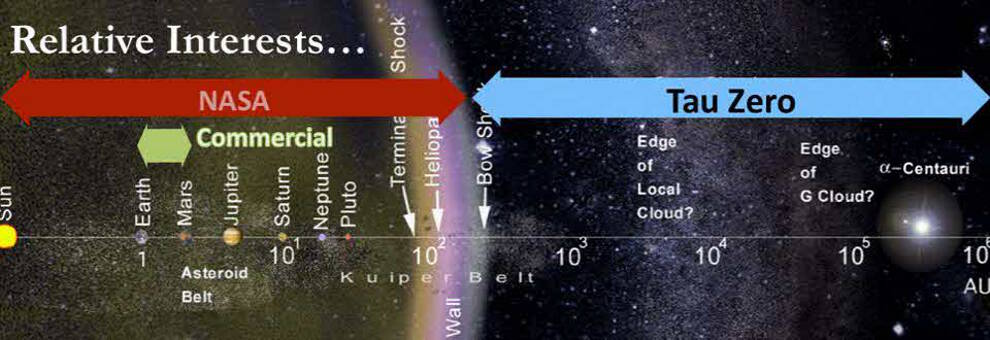
Space Exploration


→ “the ongoing discovery and exploration of celestial structures in outer space”


I found a quite impressive website about exploring the universe online → http://htwins.net/scale2/ !!!!


“Earth is the cradle of humanity, but it is impossible to live forever in the cradle”
~ Tsiolkovski


SlideShow-TZFWorkA-2


  • a waste of money?
  • new life?
  • new world? new civilization?
  • destinations

  • planetary science


HOW?
  • robotic probes
  • human spaceflight


Summer triangle
  • Lyra constellation
    • Vega
    • Altair
    • Deneb


Interesting facts:


Procyon
  • over next 10 mio years it will grow to 100 times bigger and turn red


→ If all the 7 billion humans stood on top of one another, the stack would approx. be 10 million kilometers tall.
  • 7 times bigger than the sun!


Links

http://www.centauri-dreams.org/


Friday, March 14, 2014

A day in life of Monika


It's a typical Monday morning. My alarm goes off at 4:45 and I am still in my cosy little land of dreams. To snooze it I know I simply have to tap the screen, so that's what I do automatically. I snooze the alarm to get at least another nine minutes of sleep.


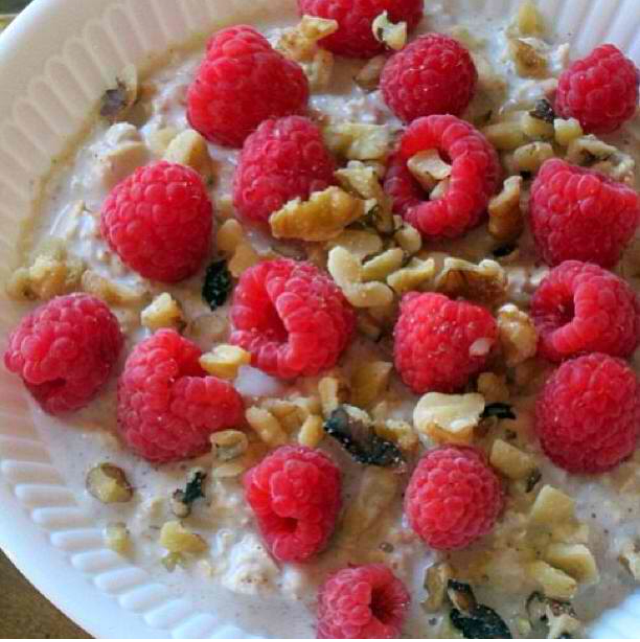
Next I go to the bathroom to brush my teeth and wash my face. Then I prepare my beloved breakfast - a classical oatmeal with fruits. I really can't get enough of it so I literally eat it every single morning.


As I need to start working at 6 AM I leave the house around 5:30 AM. After a six-hour shift (or four-hour shift depends on how I have class that afternoon) I drive home to leave the car in the garage. At noon I sometimes have a quick meal before I head to university.


Usually I have three to four classes a day and am finished around three or five o'clock. When the weather is nice I like to walk home from university, otherwise I take the bus. When I arrive at home, my mother has prepared something delicious to eat. I am really thankful to have my family waiting for me at home and supporting me no matter what. In the evening I like to relax and do my homework (if there is some).


Saturday, January 18, 2014

Vocab Notebook 2

So, my method for learning the great number of words for the second PC actually changed a little bit. For the first PC I created a word doc and wrote all the vocabulary in a spreadsheet. I discovered that I memorize unfamiliar words better when I write them down in my book, so I did this. There were about 400 vocabulary in total so, in order to manage writing all those out, I already started to do so during Christmas break. I worked with four different websites that helped me out a great deal: Vocabulary.com, Oxforddictionaries.com, Thesaurus.com and Howjsay.com. I wrote down every single unfamiliar word in my vocab book along with its explanation, synonyms, antonyms and some example sentences too. I also used the vocab list on Vocabulary.com, as it enables me to test myself whether I learned something or not. I focused on the 'hard' words first, as they are the more tricky ones. As the pronunciation of those words where extremely important for this part of the PC, I actually studied the phonetic alphabet and wrote every single word I wasn't sure of how to pronounce in phonetic script. I also worked with the "spelling bee" on Vocabulary.com, to make sure that I memorized the pronunciation. Unfortunately I could not save my progress with the spelling bee on Vocabulary.com so I had to start over and over again, which was a little bit annoying. All in all, I will definitely continue to write vocabulary down as my experience has appeared to be the best way of memorizing unfamiliar words.

Sunday, January 12, 2014

Reflection on the Pecha Kucha experience


When I first heard the term "Pecha Kucha" I haven't had a idea what this could be. The first challenge was the pronunciation of this word. After a considerable long time of searching the web, I finally found I funny video on YouTube, which we got shown in class the next day. It’s a 'cover' of the well-known song "Mahna Mahna" from the Muppet Show. I continued informing myself about the presentation style and I was actually really surprised to read that this is a well-known presentation style even beyond China. There are a number of events and "Pecha Kucha nights" organized. This presentation uses 20 pictures per 20 seconds. This meant that we would have only six minutes and 40 seconds for our whole presentation. My first thought wasn't negative at all! I found the task to create a "Pecha Kucha" presentation challenging but I was motivated to do it. 

For our presentation we chose the topic euronews because we found it quite fascinating that the channel is available in 13 languages. Unfortunately, when we started researching we found out that the provided information is rather subjective. A prerequisite for this presentation is high-quality, comprehensive and above all not only on-sided. The topic can be very dry and boring unless you have an interest in that area and we had so we started digging deeper. While writing our transcript we wanted to keep it as interesting as possible. We wrote thousands of mails (or maybe just nine hundred) to finally get an answer from an account director from euronews. We asked him some questions that were not to find anywhere on the internet. I have to say that we were really lucky that someone actually answered our questions. We combined the information what we felt was important to mention from the euronews official website, with the interview of the account director. At first I was a little bit skeptical if people would be interested in this topic but I think we managed to arise the interest mentioning the survey we have done in class. The central aim of our presentation was though, to make our classmates realize what a great opportunity this is to enrich our language skills. It provides countless ways to improve our fluency and to acquire some new vocabulary. I am sure that the spoken presentation was way more authentic than the written one and that we managed to deliver it in an interesting way. =)


Monday, January 6, 2014

Summary

Before:
SUMMARY OF Europe already has one foot in “Japanese” deflation grave
The risk of an European deflation and a potential debt crisis are being analyzed by Ambrose Evans-Pritchard in the article “Europe already has one foot in “Japanese” deflation grave”, published in “The Telegraph” on October 23, 2013.

According to Evans-Pritchard, Europe is going to slide into a deflation trap, as Japan is now, if policy errors continue to happen. A deflation would become lethal, once total debt exceeds 300pc of GDP. Besides, inflation has dropped to an alarming rate of 0.9pc, which caused price falls and a growth in debt in many European countries. Especially Italy has faced the problem of “runaway-dept”.

Mr Darvas states that the only possible solution is to let the inflation grow. The EBC should implement all possible measures to ensure that inflation does not fall below 2pc, which however is not done. Moreover this is not accepted by Germany, even though it may soon become a victim of deflation itself.

The author’s proposed solution is the unification of France, Italy, Spain and the Club Med allies. Demanding appropriate action from Germany, they could force them to accept inflation. On the contrary, Europe hopes for global growth to save the economy, which is unlikely to happen.


200 WORDS, NOT INCLUDING TITLE


After:
SUMMARY OF Europe already has one foot in “Japanese” deflation grave
The risk of a European deflation and potential debt crisis are being analyzed by Ambrose Evans-Pritchard in the article “Europe already has one foot in “Japanese” deflation grave”, published in “The Telegraph” on October 23, 2013.

According to Evans-Pritchard, Europe is going to slide into a deflation trap, as Japan is now, if policy errors continue to happen. Deflation would become lethal, once total debt exceeds 300pc of GDP. Besides, inflation has dropped to an alarming rate of 0.9pc, which caused price falls and a growth in debt in many European countries. Especially Italy has faced the problem of “runaway-debt”.

It is thought that the only possible solution is to let inflation grow. The EBC should implement all possible measures to ensure that inflation does not fall below 2pc, which however is not being done. Moreover this is not accepted by Germany, even though it may soon become a victim of deflation itself. 

The author’s proposed solution is for Club Med to demand appropriate action from Germany: force them to accept inflation. On the contrary, Europe hopes for global growth to save the economy, which is unlikely to happen.